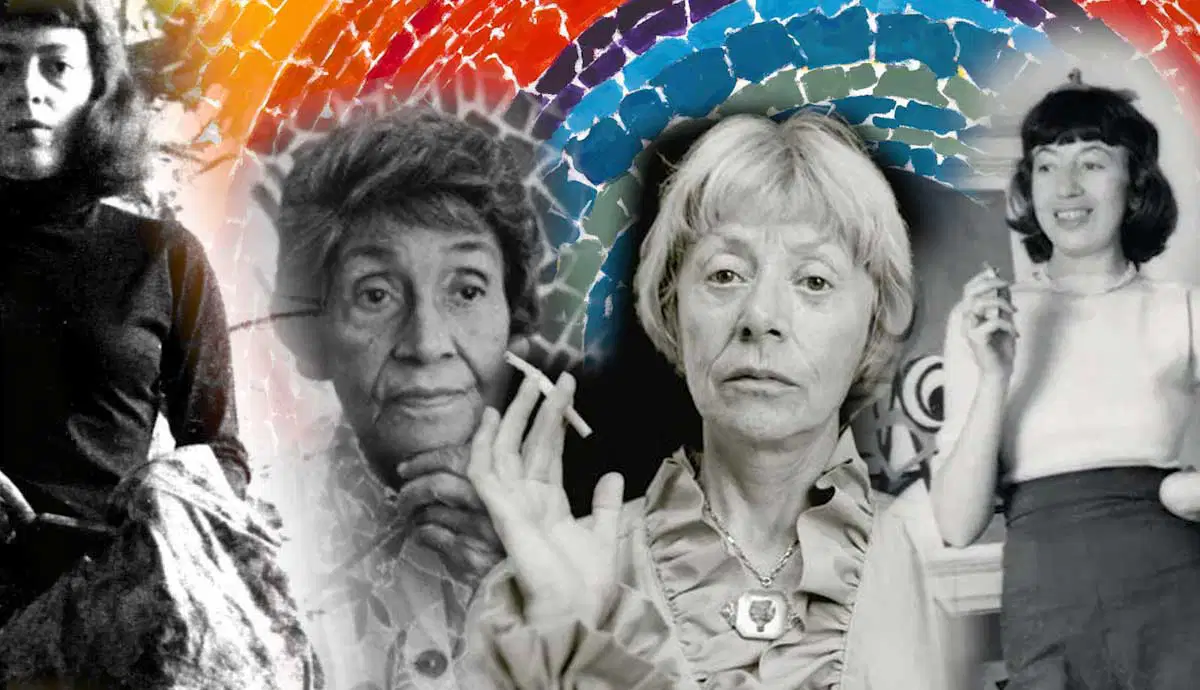

Elaine de Kooning was one of the greatest artists of the Abstract Expressionism movement, whose fame was unfortunately diminished by that of her husband, Willem de Kooning. Although Elaine insisted that she painted in his light and not in his shadow, it took art historians years to truly appreciate her artistic impact. Read on to get familiar with the greatest works of Elaine de Kooning.
1. Self-Portrait by Elaine de Kooning
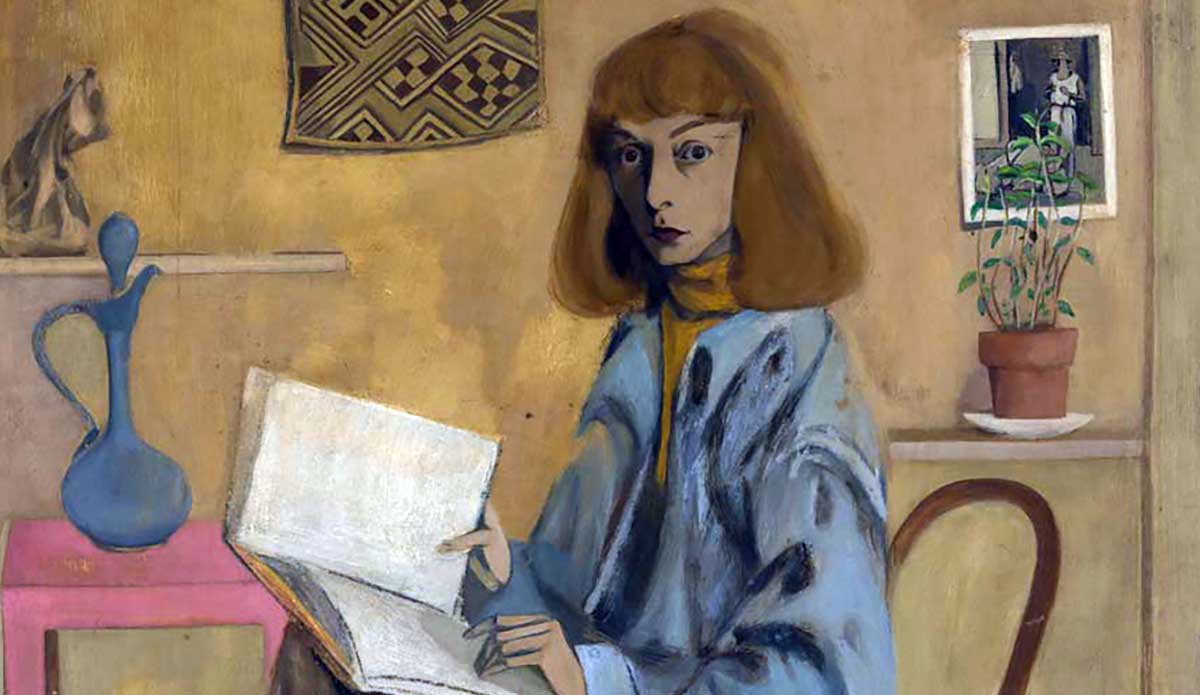
Elaine de Kooning was one of the brightest names in the American history of art and one of the formative characters of the Abstract Expressionist movement. Born in New York in 1918, she started to earn money by selling art in her school years and drawing portraits of her classmates. From her early childhood, she was forcibly exposed to adult responsibilities. Elaine’s mother was committed to a psychiatric institution for supposedly neglecting four of her children, leaving ten-year-old Elaine, the oldest sibling, to care for the younger ones. The artist insisted that her mother was never actually neglecting them, but rather attracted neighbors’ negative attention with her unconventional clothing style and taste. Her mother had also exposed Elaine to art, taking her to the Metropolitan Museum and hanging painting reproductions in her room.
During her studies in an art school, twenty-year-old Elaine Fried met Willem de Kooning, the Dutch artist who moved to the US a decade before, hiding in a cargo ship that sailed from Europe to Virginia. The attraction was instant and mutual, and soon the couple married. For decades, Elaine de Kooning referred to her husband as the greatest art teacher she ever had. Still, she was an artist in her own right and a brilliant and independent woman.
Her 1946 self-portrait shows her seated cross-legged with a book in her hands, surrounded by various objects. These objects look like still-life studies or elements borrowed from the works of other modernists—a patterned cloth, a jug, a mug carelessly placed on the floor, and a set of photographs rendered in a style similar to Cubism.
2. Bullfight
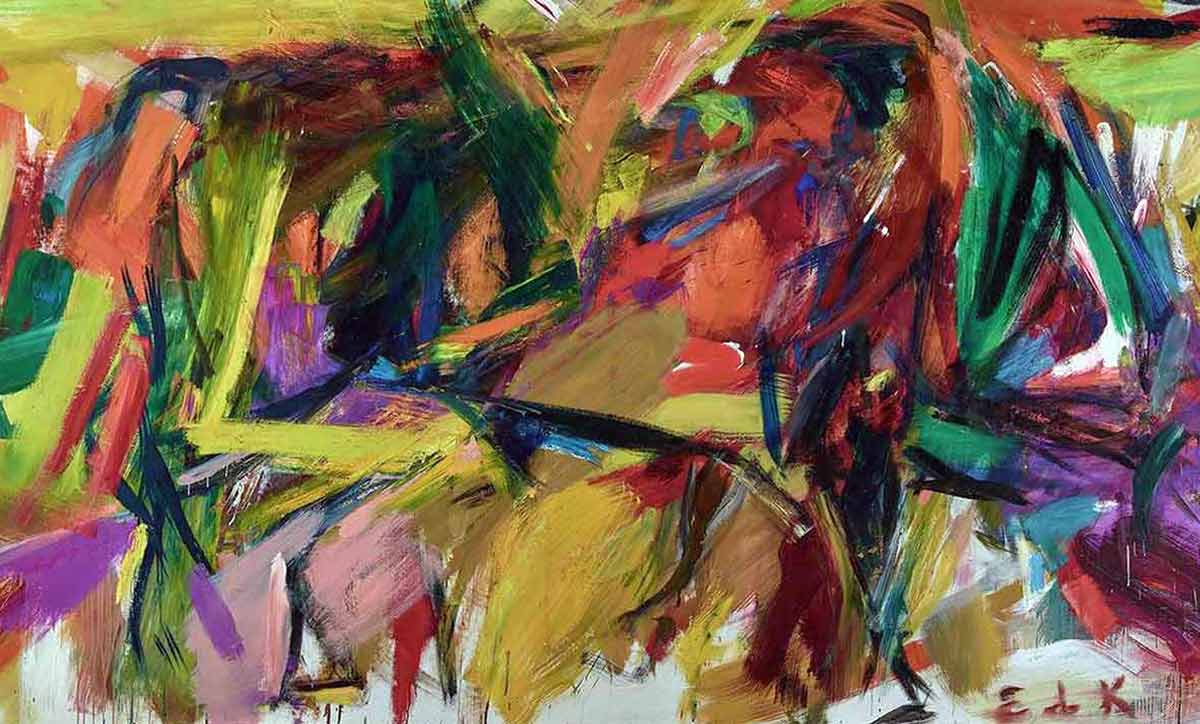
Elaine de Kooning’s role in the Abstract Expressionist movement is hard to overestimate, especially considering the role she played in promoting her husband’s career. Similarly to Lee Krasner, an established artist who nearly sacrificed her art to Jackson Pollock’s addictions, Elaine de Kooning’s art was regarded as derivative from her husband’s for a long time. In reality, she was an independent art critic with strong opinions who promoted Abstract Expressionist art and Willem de Kooning’s manager who did the majority of work-related social interactions. But most importantly, she was an independent artist with a strong theoretical background and her own aspirations and ideas.
While the rest of the Abstract Expressionists remained within the realm of non-figurative art, Elaine de Kooning decided to make a full circle, landing back into figuration. Still, this figuration was augmented with new knowledge and skills, as she used abstract language. One of her most important paintings, the monumental work Bullfight, demonstrated her style of balancing on the thin line between abstraction and figuration.
In 1958, she took a teaching position at the University of New Mexico. By that time, her relationship with Willem de Kooning deteriorated, and the artist needed a change of scenery and a new project. De Kooning’s friend, the renowned photographer Margaret Randall, took her over the Mexican border to see bullfights. The gruesome and dramatic scenes unlocked a new relationship with movement and energy in painting. The year-long New Mexico period was formative for Elaine de Kooning’s mature artistic period since it helped the artist re-evaluate color and contrast in her works.
3. Portrait of John F. Kennedy
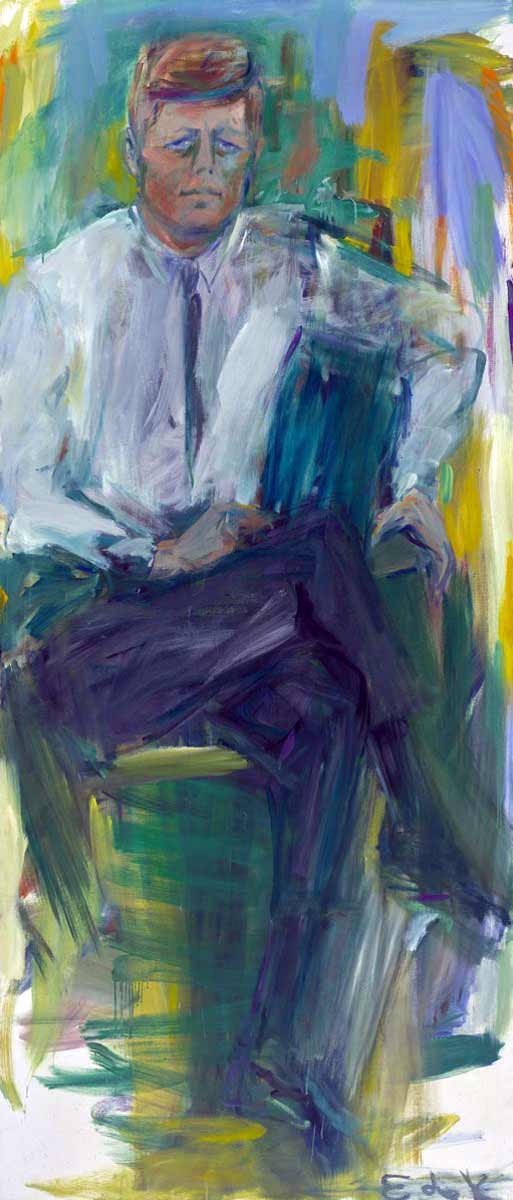
Exploring further the figurative possibilities of abstract methods, Elaine de Kooning became the pioneering and the most prominent artist in the category of Abstract Expressionist portraiture. She developed a technique of mixing bold and gestural brushstrokes with small hatches of pencil or charcoal, combining media, colors, and textures. Over her lifetime, she created hundreds of portraits, most of them of friends, family, artists, dealers, and critics. Yet her most famous and important portrait work represented someone far removed from the bohemian circles of New York.
The Kennedy family approached Elaine de Kooning on their own initiative, believing her art best represented the vision of Kennedy’s America and his public image. Elaine de Kooning worked with Kennedy in person for almost three weeks during the winter holiday season in 1962. In her notes, she complained about how hard it was to catch a perfect look at the president, and how he looked slightly different every day she was around him. He was restless, constantly on the move, so the artist could not find a proper gesture or pose that would reflect his character fully.
Part of the reason for Kennedy’s constant movement was his severe back injury during his World War II service. For more than twenty years, he lived with chronic pain that could not be treated. De Kooning spent many months trying to align together the image of the president in person, surrounded by his family, and his figure seen in mass media, blending these two different social roles.
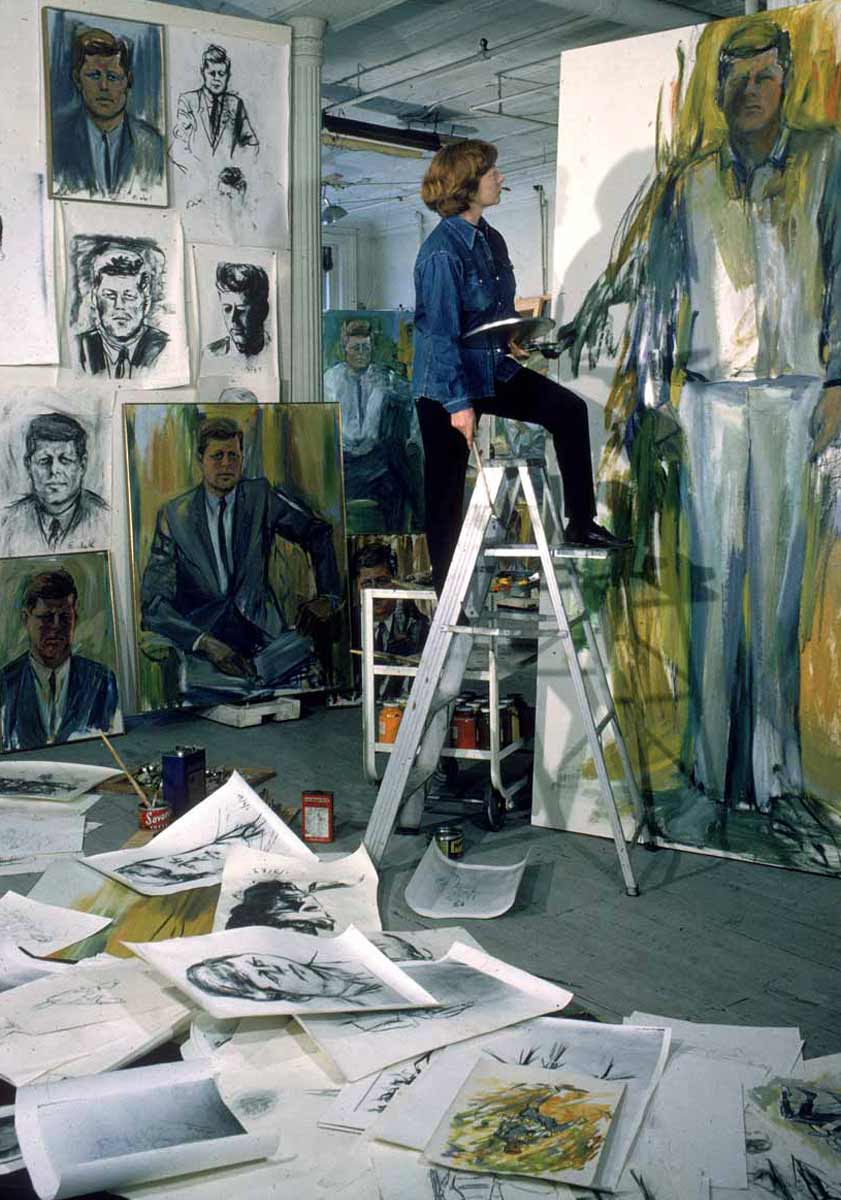
After Kennedy’s assassination in November 1963, de Kooning abandoned the painting for months, as she was too shocked to keep working on it. In the months following the tragic event, she kept drawing Kennedy’s figure and even creating bronze busts of him, but none of those works had faces. For an entire year, she held off from painting the portrait completely and focused on teaching art, finally presenting the complete work in 1965. Upon finishing it, she complained that she had failed to paint Kennedy, capturing only a tiny glimpse of his image. His presence, according to the artist, was too large and too dynamic to convey in one work, and, with Kennedy’s death, his features started to erase from her memory, fading and distorting.
The collection of presidents’ portraits in the National Portrait Gallery in Washington, D.C. is not exactly a lively one. Official portraits of the country’s leaders, regardless of the century, were usually made in somber tones, with dark suits and pensive stares. But Elaine de Kooning’s work ruined all possible conventions with the strokes of yellow and green dominating the painting. The ex-president Truman, who accepted the painting into his library collection, was notorious for his dislike for modern art. In her speech, de Kooning expressed hope that one day Truman would “get used to it.”
4. Basketball Players
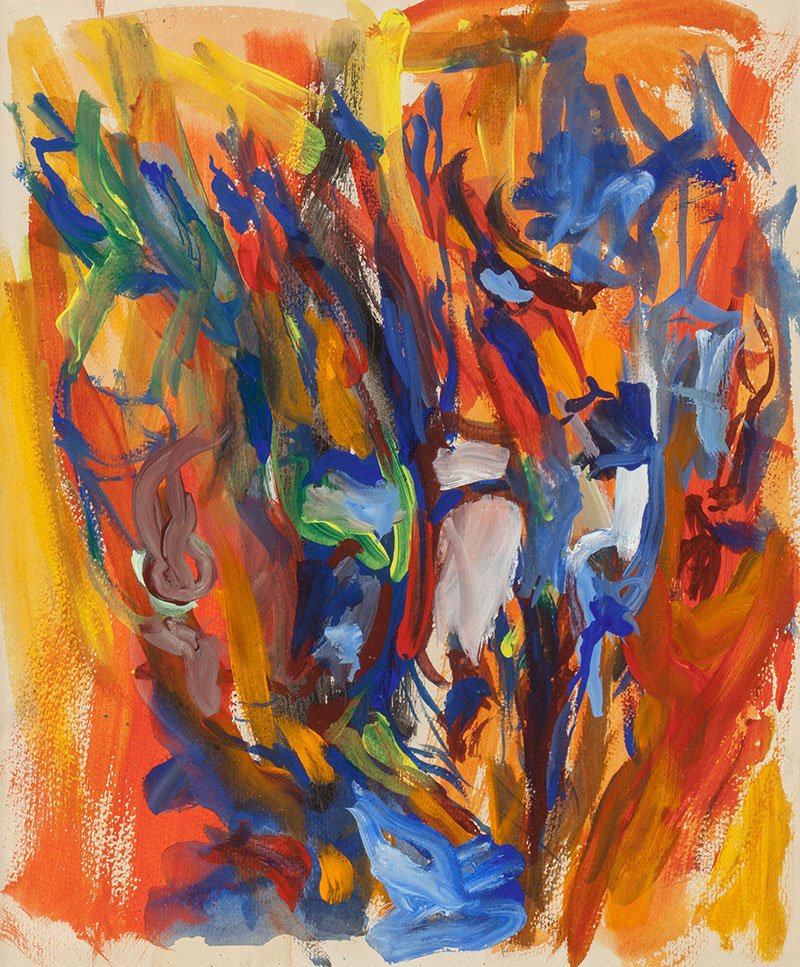
Elaine de Kooning frequently talked about her fascination with silhouettes, and our ability to recognize a familiar figure from afar without seeing their face. For her, each character had a signature pose or a way of positioning themselves in space that spoke of their identity much louder and faster than other communicational means. During her career, she mostly focused on painting men, and this was a conscious choice. For centuries, male artists developed a canon of representing women in their portraits, taking charge of the norms and conventions of painted femininity. Elaine de Kooning aimed to flip this canon, directly opposing it—as a woman artist, she built her own set of representation standards.
De Kooning’s studies of basketball players developed the idea of movement intersecting with personality even further. For more than thirty years, she observed games and painted scenes inspired by them, sometimes copying images from photographs. She compared the suspended figures of players amidst the game to the Mannerist compositions in El Greco’s paintings—full of dynamism and drama.
5. The Bacchus Series: Elaine de Kooning Reimagining Classic Mythology
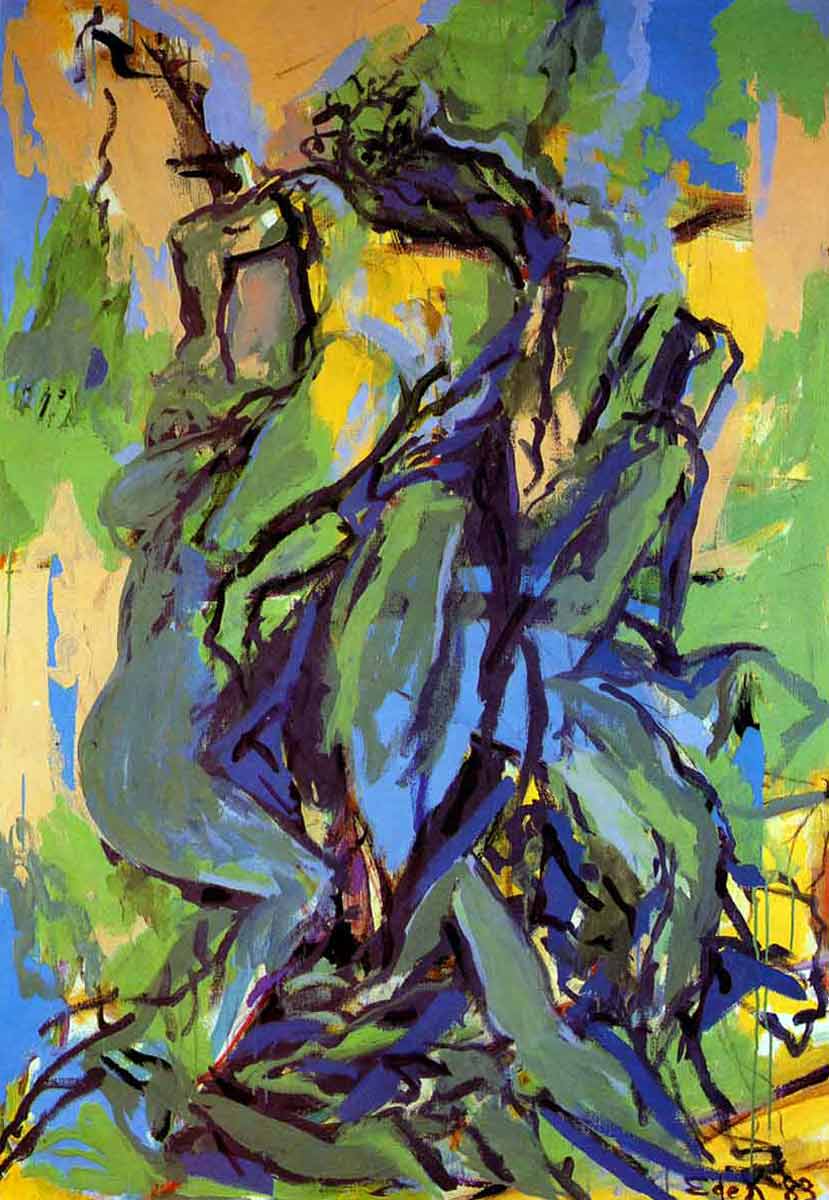
In 1876, Elaine de Kooning visited Paris. In the Luxembourg Garden, she saw a monumental late-19th-century sculpture The Triumph of Silenus that inspired her new series. Silenus was a Greek companion to Dyonysys and the less-revered god of wine and grapes. According to the myths, Silenus possessed prophetic powers while drunk, and thus artists usually depicted him as unable to stand, supported by nymphs and satyrs due to his intoxication. De Kooning’s choice to call in Bacchus was perhaps motivated by a wider recognition of the latter name. For the first time in her career, the artist used acrylic paint, combined with charcoal, watercolor, and other materials.
The abstract impression of the work intensifies due to the angle from which Elaine de Kooning observed the statue. She stood close to the pedestal, seeing the composition slightly from below. Bacchus eventually turned into a series of similar paintings, since the artist believed she could better explore her subject through continuous representation. Curiously, this was not the last image of the god Bacchus in the works of Abstract Expressionist artists. In 2006, the famous Cy Twombly painted a monumental 200-inch-long image of chaotic looped red lines, also titled Bacchus. However, instead of the actual depiction of the god’s figure, Twombly aimed to convey his spirit and visualize his power.