
In 1997, two engineers from Intel and Ericsson sat in a Toronto bar searching for a codename for a new short-range wireless protocol. Inspired by a history book about 10th-century Vikings, they chose Harald Bluetooth, a Danish king (958-986) who united warring Scandinavian tribes just as their technology would unite rival electronics. Behind that sleek modern symbol lies a gritty medieval tale of a blackened tooth, political survival against the Holy Roman Empire, and a fatal ambush orchestrated by the king’s own son.
Was Harald Bluetooth a Real Person?
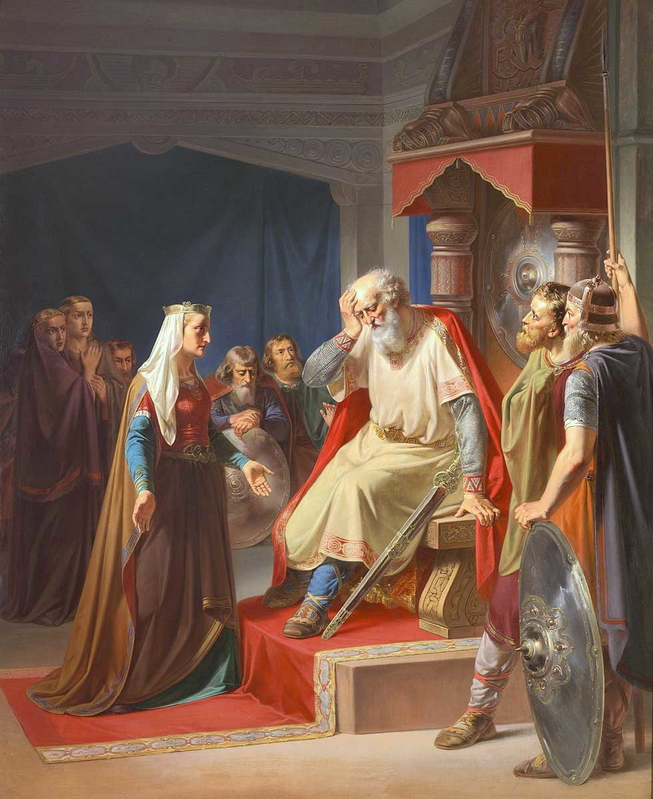
Harald Bluetooth appears in several Norse sagas, written in the 12th and 13th centuries. But many of the people and stories in these sagas are more myth than history. So, was Harald Bluetooth a real person? Yes.
We know that Harald was a real person, as he is mentioned in several contemporary chronicles, including the Res Gestae Saxonicae, written by a Saxon monk named Widukind of Corvey between 967-8, in which he talks about Harald’s conversion to Christianity. Writing around the same time, Ruotger of Cologne also mentions his conversion in the Vita Brunonis. Thietmar of Merseburg recalls a military clash between Harald and the Holy Roman Emperor Otto II in 974, writing about half a century later.
Our most extensive source is Adam of Bremen, who provides a detailed account of Harald’s reign in his Gesta Hammaburgensis ecclesiae pontificum, written c. 1075. Harald’s name also appears on contemporary runestone inscriptions.
Therefore, we know Harald was a real person, and we have contemporary sources to confirm some of the more outrageous claims made about him in the sagas.
Denmark’s First Christian King
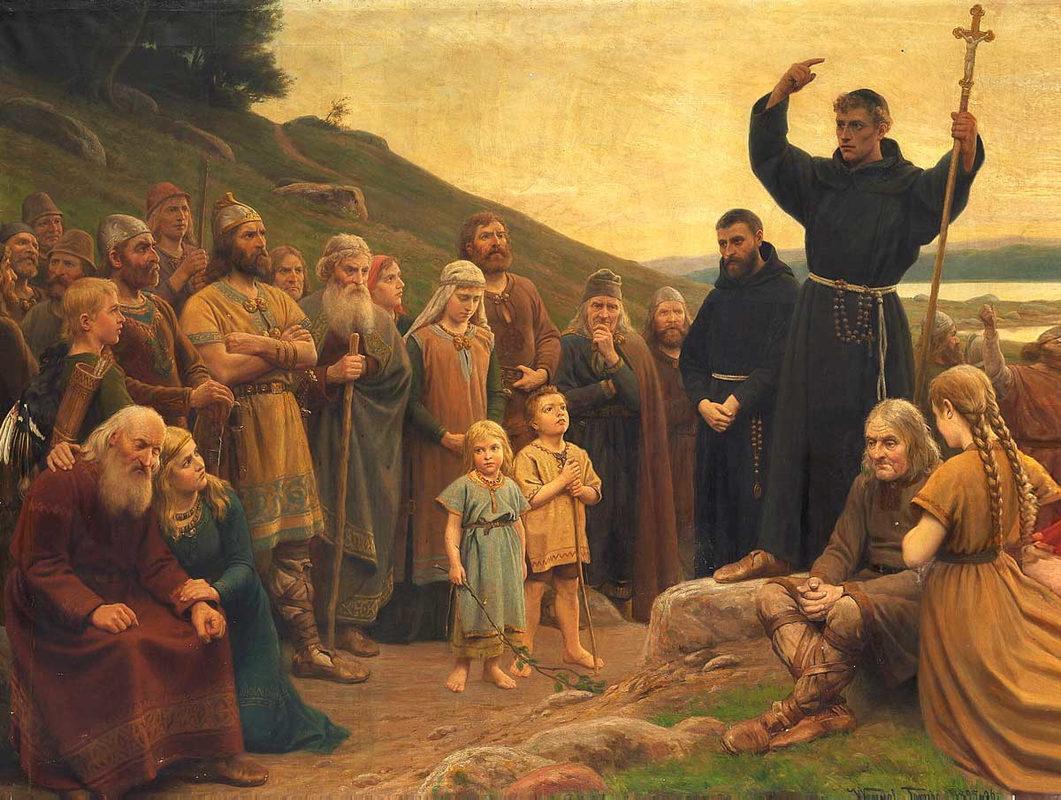
According to the sources, Harald was the son of Gorm the Old, the first king of a unified Denmark from around 936, and his wife Thrya. He succeeded his father to power following his death. His parents were pagans, and Harald probably grew up believing in the Norse gods and mythology.
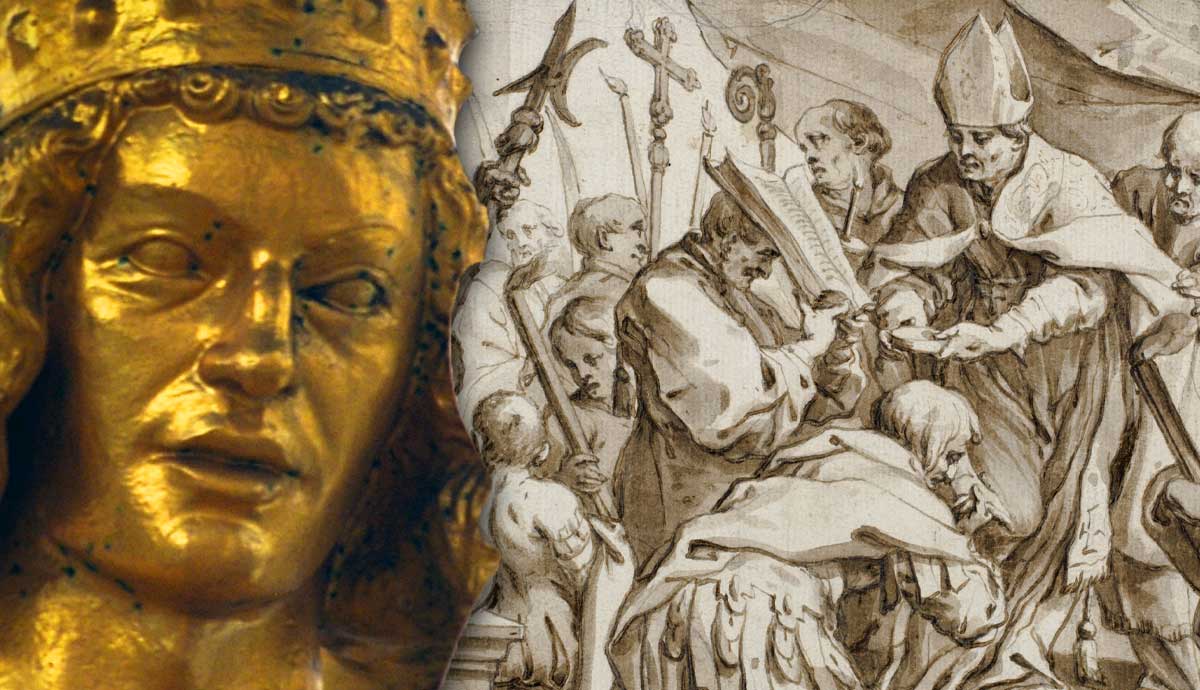
Around 960, maybe in 963, Harald converted to Christianity, becoming Denmark’s first Christian king. It was not a novelty, as Christianity had progressively spread across the region since the 9th century. Yet, the king’s conversion made the new religion durable.
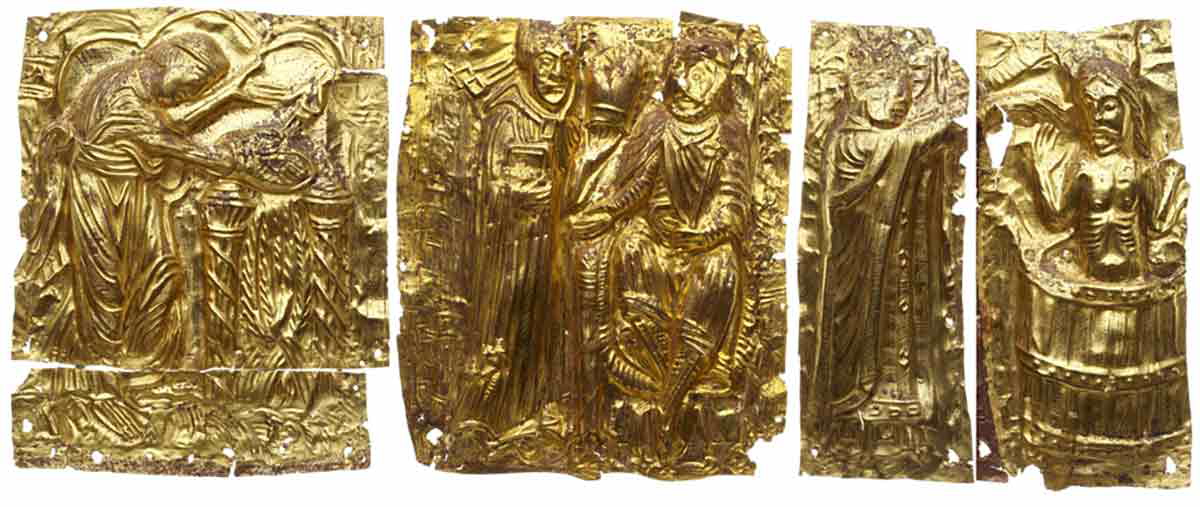
Harald’s conversion was not only an act of faith but also a political decision. Otto the Great, the East Frankish king and Holy Roman Emperor in the mid-10th century, threatened to expand his territories across Danish borders. His first move was the creation of bishoprics in Denmark. Harald’s conversion helped the Danish Church maintain its independence. Stories also suggest that he converted after a missionary monk named Poppo held a burning hot iron in his hand without injuring himself as proof of his faith.
Harald wished to keep his people’s trust and ensured a smooth transition from paganism to Christianity by not forcing them to give up their old beliefs and traditions. This was in contrast to later Viking kings, such as King Olaf Tryggvason of Norway.
Why the Nickname Harald Bluetooth?

So why was King Harald known as “Bluetooth”? The origin behind this nickname is probably not that charming. Harald supposedly had a rotten tooth, which looked blue or black, as his Danish name would suggest: Harald Blåtand Gormsen, blå meaning blue and tand tooth.
The first mention of this detail appears in the Chronicon Roskildense, a 12th-century Danish chronicle written in Latin that describes Danish historical events, including the kingdom’s Christianization. The author used the Latin word Blatan to describe Harald without providing further details.
William of Æbelholt, a French churchman who moved to Denmark to help restore religious discipline in the diocese of Roskilde, was the first to explain King Harald’s blue tooth. In his genealogy of the Danish kings, written during the second half of the 12th century, William described Harald’s tooth as dark blue, almost black.
Yet, the origin of the tooth’s color remains unknown. Harald may have had a rotten tooth that was particularly visible. The lack of health and dental care at the time meant it was common to have bad teeth, even among royals.
Some give a less gruesome explanation for Harald’s nickname. Scandinavians are very fond of berries, a type of wild fruit widespread in northern lands. Harald may have been particularly fond of blue-colored berries, and it may have caused his teeth to blacken.
Mentions of the blue tooth only appeared two centuries after Harald’s death. During his reign, the king was undoubtedly known as Harald Gormsson: the son of Gorm. In Scandinavian tradition, people were known by their first names. They also used a patronymic made of their father’s name or, less often, their mother’s name. The father’s or mother’s name was followed by the -(s)son/-sen suffix or -dóttir/-dotter. Eventually, it became a kind of surname, sometimes combined with an inherited family name. The mysterious origin of Harald’s nickname remains unclear. Because of its singularity, Harald and his supposed blue tooth stood the test of time and eventually became famous.
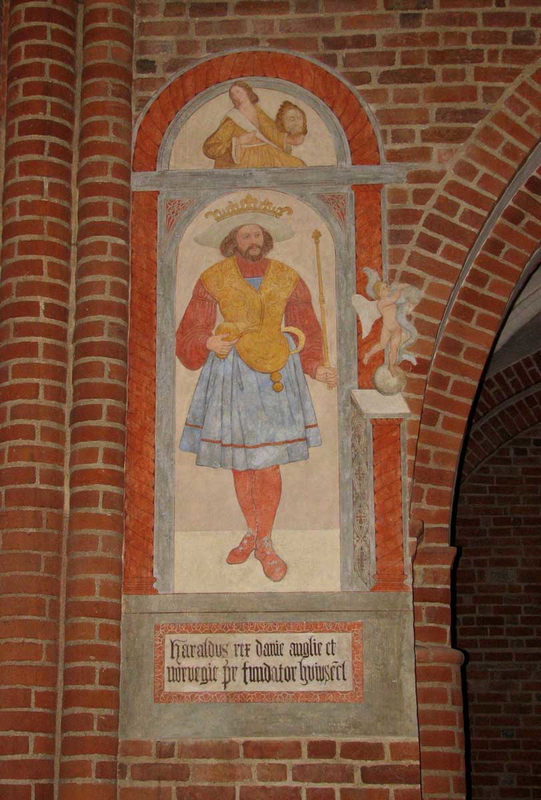
Gaining a clear impression of Harald’s general appearance is also challenging. One of the few depictions of him, a painting on one of the pillars of Roskilde Cathedral, shows Harald dressed as a man from the 16th century with red stockings, a blue skirt, and golden armor. Things he would not have worn in his time, even though the Vikings were fans of colorful clothing.
The Jelling Stones
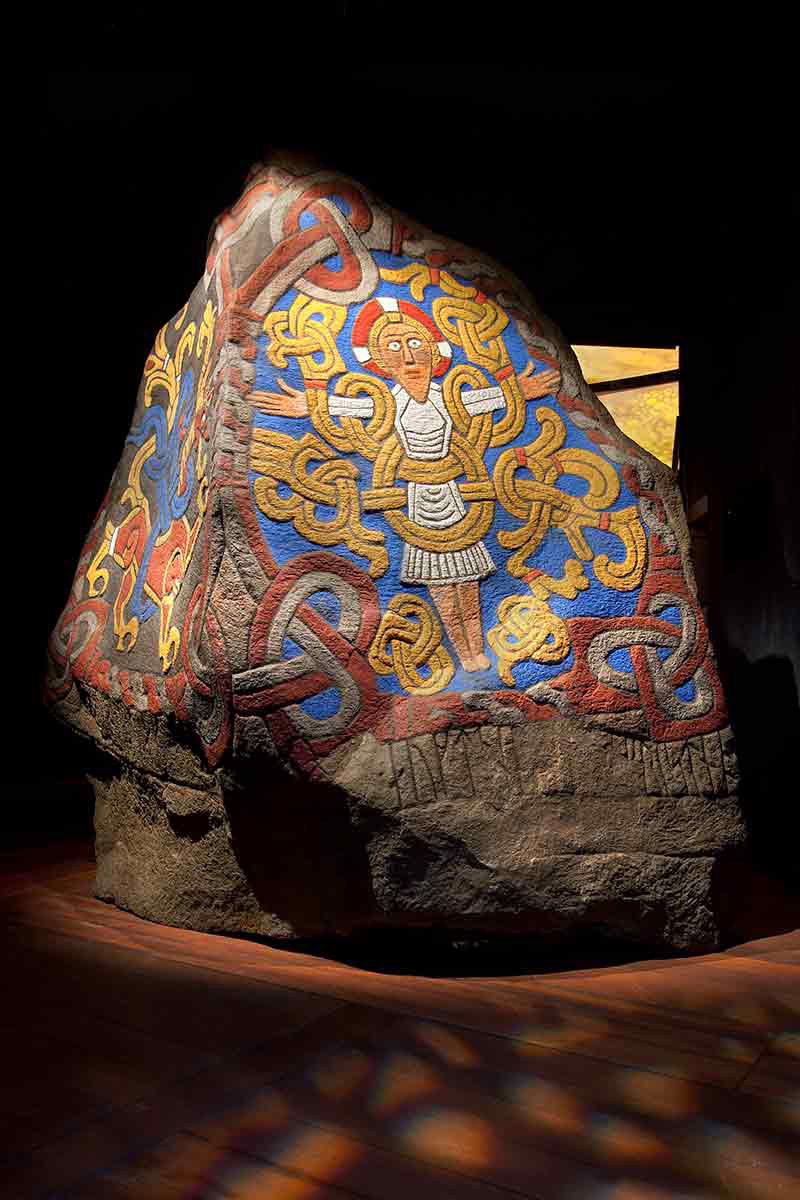
Harald’s reign left a striking mark on the Danish landscape. Harald established a network of round-shaped fortresses across Denmark and southern Sweden. He also modernized the Dannevirke, a fortification network in Schleswig-Holstein, in neighboring northern Germany. But the Jelling monumental complex, which contains two large and important runestones, is the most significant and precious source of information about Harald Bluetooth. Archaeologists have studied this vast carved runestone site in central Denmark since 1704.
Thryra seems to have predeceased her husband Gorm the Old. The older of the two Jelling Runestones, dating to around 950, was dedicated by Gorm in her honor. The second runestone, dated to around 965, was erected by Harald and honors both his parents and his achievement in conquering Denmark and Norway. This second stone is also sometimes called “Denmark’s birth certificate”, as it is the first time that Denmark is described as a unified political entity. The runestone also honors Harald Bluetooth’s conversion to Christianity and the official conversion of Denmark in the early 960s and has the oldest known image of Jesus Christ from the Scandinavian world.
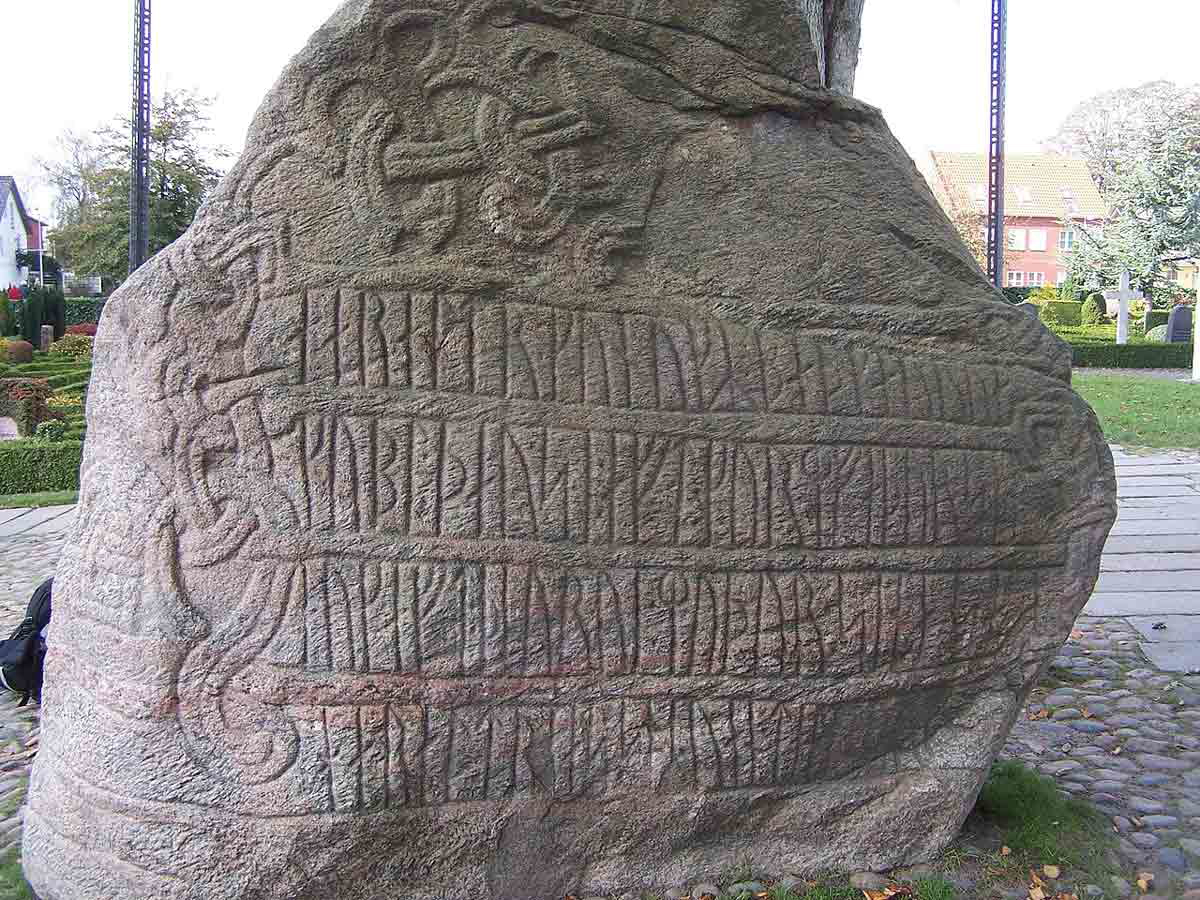
The two Jelling Runestones are found within a royal complex covering 12.5 hectares that was enclosed by a wooden palisade of trapezoidal plan. Inside the complex were two large mounds; the north mound is traditionally called Thyra’s mound, and the south mound is Gorm’s mound. The north mound was encircled by a 360-meter-long stone ship setting. This was usually used to mark important burial mounds. Between the two mounds is a church and the two runestones. While it is believed that the larger and newer of the two runestones, dedicated by Harald, is in its original position, it is thought that the smaller of the two was originally the stern stone of the ship and then moved to be closer to the church.
After his conversion to Christianity, Harald Bluetooth moved his capital from Jelling to Roskilde on the island of Zealand to create a new Christian capital.
Forced into Exile by His Son
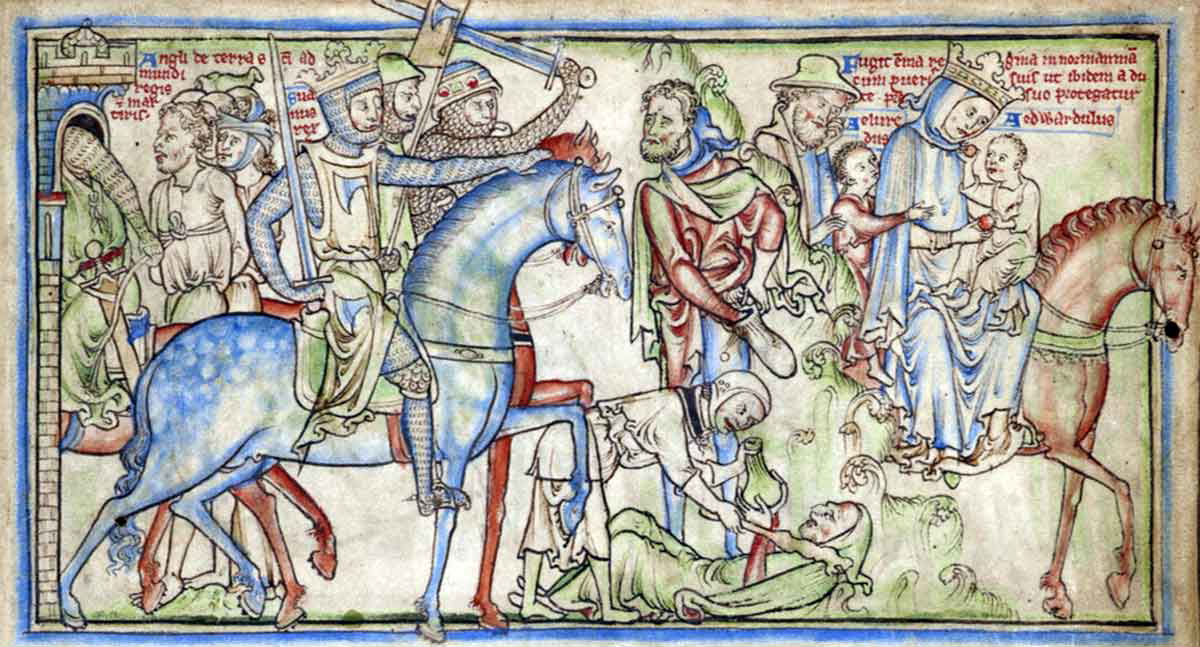
After many years of political success and the establishment of a strong power over vast unified territories, the end of Harald Bluetooth’s reign was initiated by the revolt of his son, Sweyn Forkbeard. Sweyn set himself up as an opposing pagan king in Jelling, and, along with some unhappy aristocrats, forced the king into exile during the 980s. He settled somewhere in the southern part of the Baltic states. Meanwhile, Sweyn not only took control of Denmark, but also conquered England and became its first Viking king.
Harald died shortly after being exiled. According to later sources, an archer killed the exiled king while the latter was relieving himself; what an ending for the great Viking king! Even the location of his grave remains in the dark. Sweyn most certainly contributed to the loss of information about his father’s life. It was only during modern times that Harald was rediscovered. First by the Danes, who saw in him a key figure in their national history, then by others, thanks to a new revolutionary technology named after him.
Harald Bluetooth and the Birth of Bluetooth Technology
In 1997, several big communication companies such as IBM, Intel, Ericsson, Nokia, and Toshiba developed a new technology to connect devices. Nokia and Ericsson, two Nordic enterprises, led the project.
On a windy night, in a bar in Toronto, two engineers from Intel and Ericsson who were working on the project were having a drink. They were looking for a good name to give to their new technology. During their conversation, they talked about their shared love for history. One of them mentioned a book he had just read about the Vikings, including one peculiar Viking king: Harald Bluetooth.
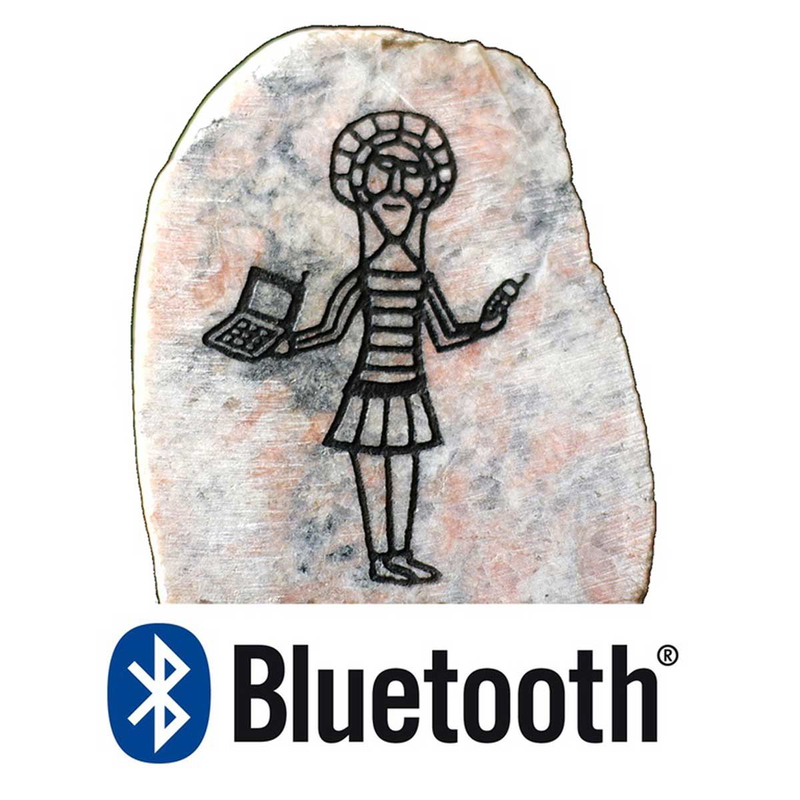
The engineers made a parallel between Harald Bluetooth, a unifying king, and the tool they had created to connect various devices in a unique network. One of them, Jim Kardach, created a PowerPoint to explain the name choice to his superiors. It contained a picture of a stylized Harald on a stone, holding a cellphone and a laptop.
Bluetooth became a code name for several months, yet it was supposed to be replaced by the name “RadioWire” or “PAN” (Personal Area Network). But the communication team grasped the power of the meaning behind “Bluetooth,” and they kept it as the technology’s official name. Bluetooth was officially launched in 1998, and Ericsson created the first Bluetooth phone in 1999. The technology is still widely used today.
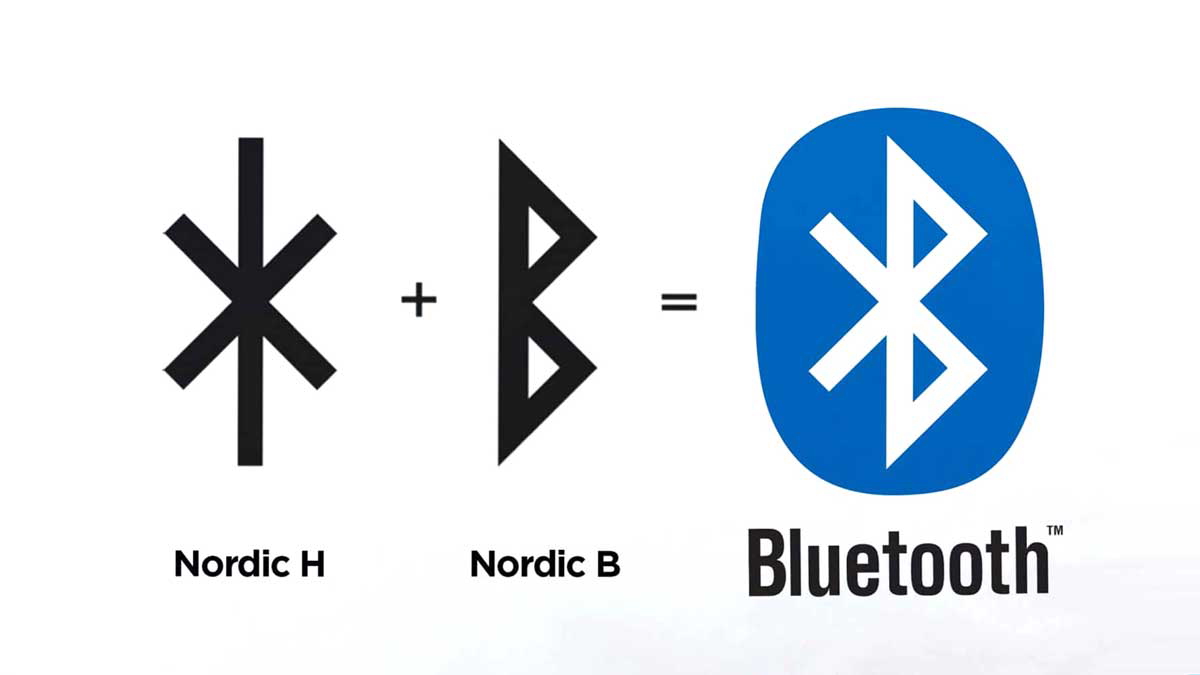
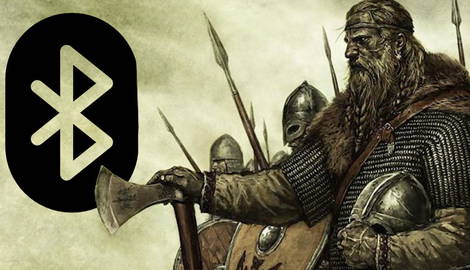
Interestingly, the Bluetooth logo is also inspired by the runic alphabet, used by Germans and Scandinavians between the end of antiquity and the Middle Ages. By combining the initials of Harald Blåtand, they came up with the current logo.
As the public became increasingly interested in the Vikings and their history through comics, books, and TV shows, the rooting of the product’s name in the culture of its place of origin seems to have offered the company a competitive advantage.
Like King Harald, who unified kingdoms, Bluetooth technology connects various devices. It also represents the joint effort of those leading different enterprises to enable communication between their products.